Lal Dera - AD Pavilion - Design Show 2023
Location: Mumbai, India
Typology: Pavilion Design and Fabrication
Year: 202e
Team: Santhosh Narayanan, Sameep Padora, Kunal Sharma
Area : Area : 54 Sqm ( L x B x H - 9.0m x 6.0m x10.0 m )
Event Name: AD Design Show 2023


The historic Lal Dera works with both form and detail and in that creates a space of opulence.
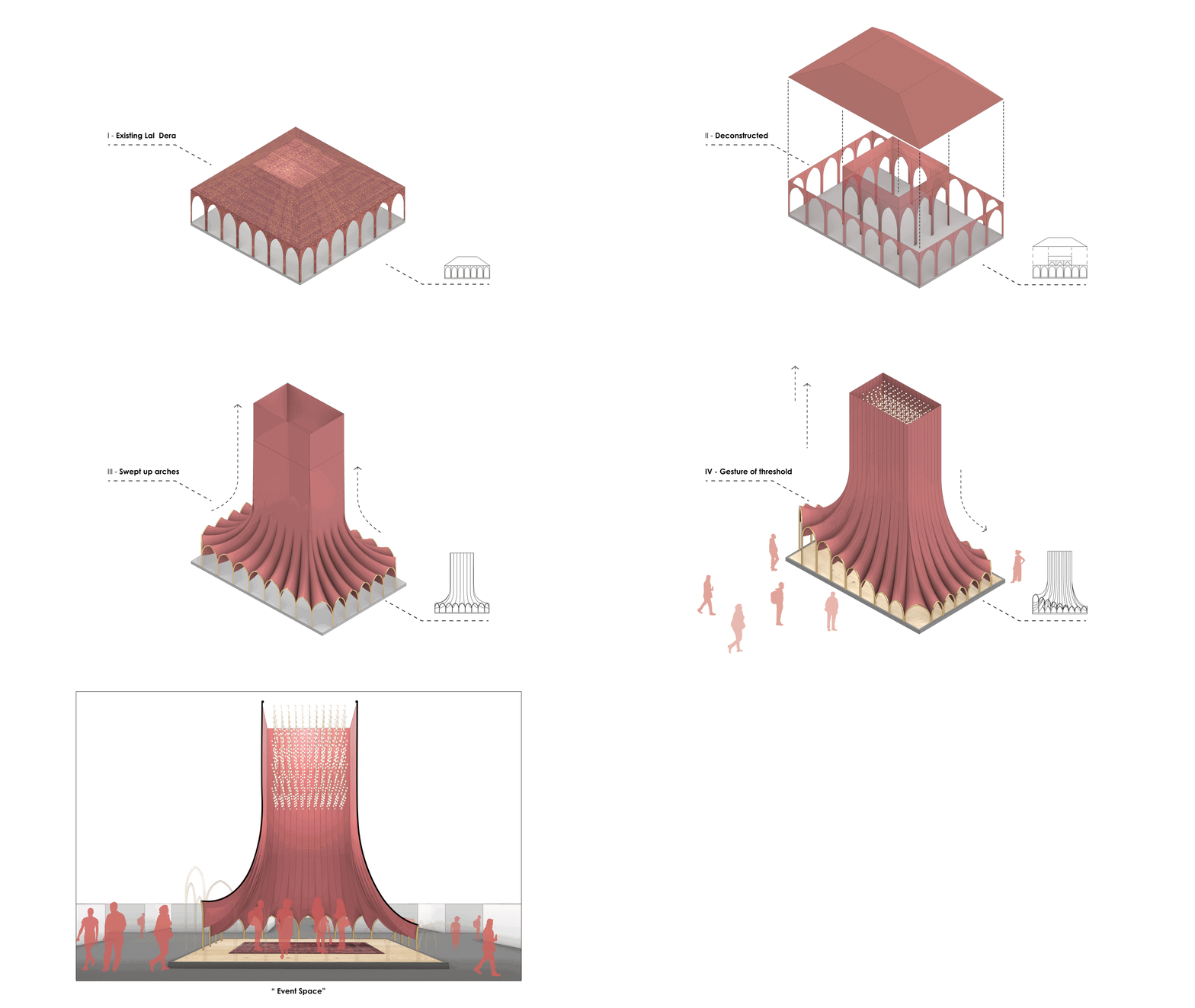
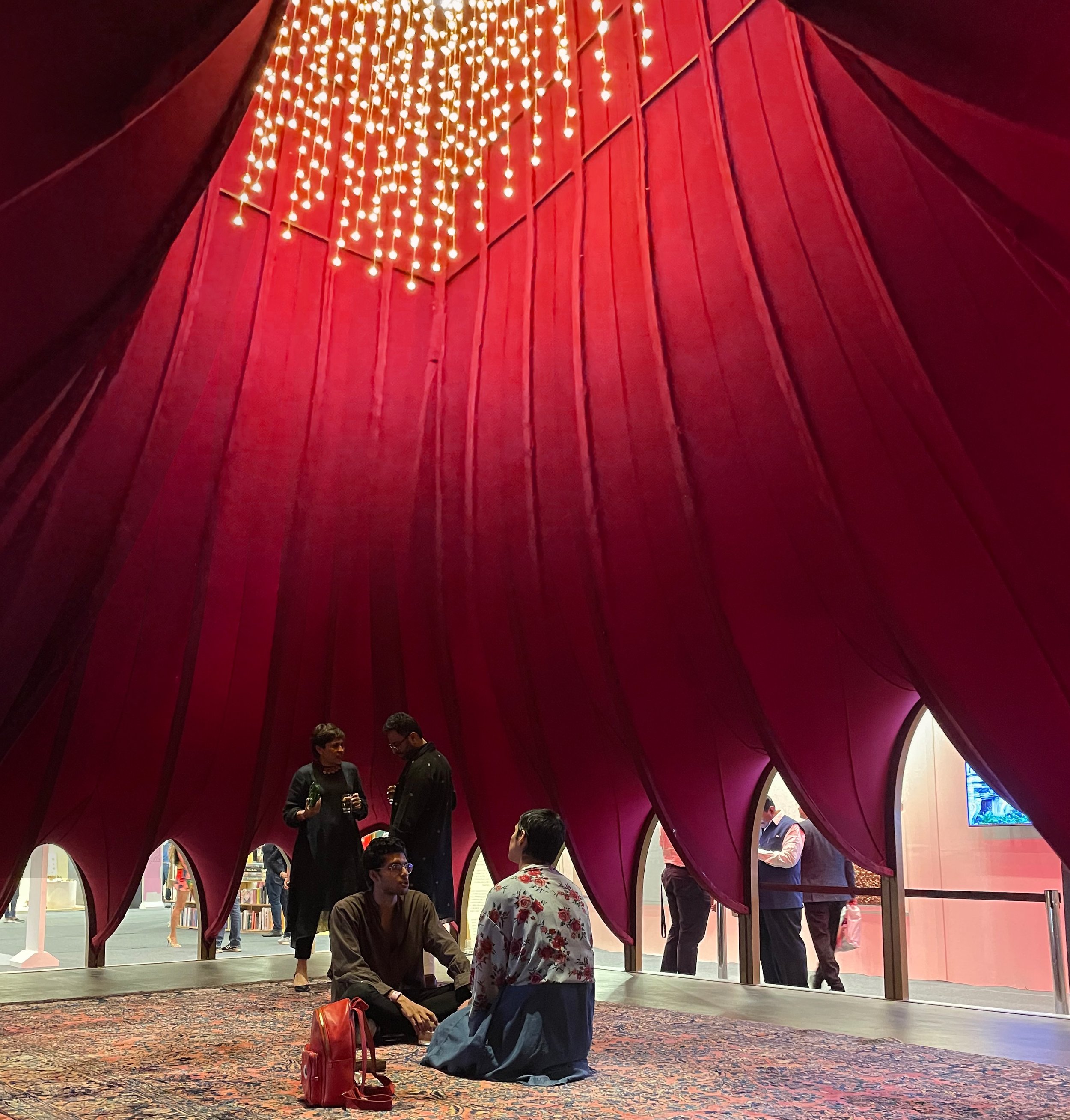
In our interpretation of the Lal Dera tent we use the structuring idea of the original, the arch and the tensioned fabric but expand its scale to take on a form of uninhibited scale.
Cloth architecture was among the most dramatic and colourful paraphernalia of princely life in the medieval world. Vast tented encampments accompanied the great monarchs of Asia and Europe on their long wars, vacations and pilgrimages. Portable, and often highly decorative, palaces of cloth afforded to the imperial entourages not only shelter and security but also the comfort and beauty to which they were accustomed.A magnificent example of medieval textile architecture is the historic Lal Dera, 'red tent' of Jodhpur (Marwar). It remains as the largest of all decorative objects to have survived from the Mughal era. The Lal Dera is housed in the Mehrangarh Museum in Jodhpur, is the most iconic of them all.Taking inspiration from its historic design, we used the structuring idea of the original, the arch and the tensioned fabric but expanded it to take a formal direction of uninhibited scale. The opulence in our interpretation is an outcome of a soaring spatial experience.
One of the most spectacular highlights of Peacock in the Desert: The Royal Arts of Jodhpur, India is the Lal Dera, or Red Tent. This intricate imperial tent is a colorful symbol of the Mughal conquest of India’s Marwar-Jodhpur kingdom.
Carefully installed for the exhibition, the tent’s canopy and back wall are from the original Lal Dera, which was made in the late 17th- or early-18th-century. It is similar to tents erected for rulers in encampments during military campaigns to match the splendor of royal residences. Red tents were reserved for rulers of the Mughal Empire, so the Lal Dera may have been captured from a Mughal camp by a rebellious maharaja.